
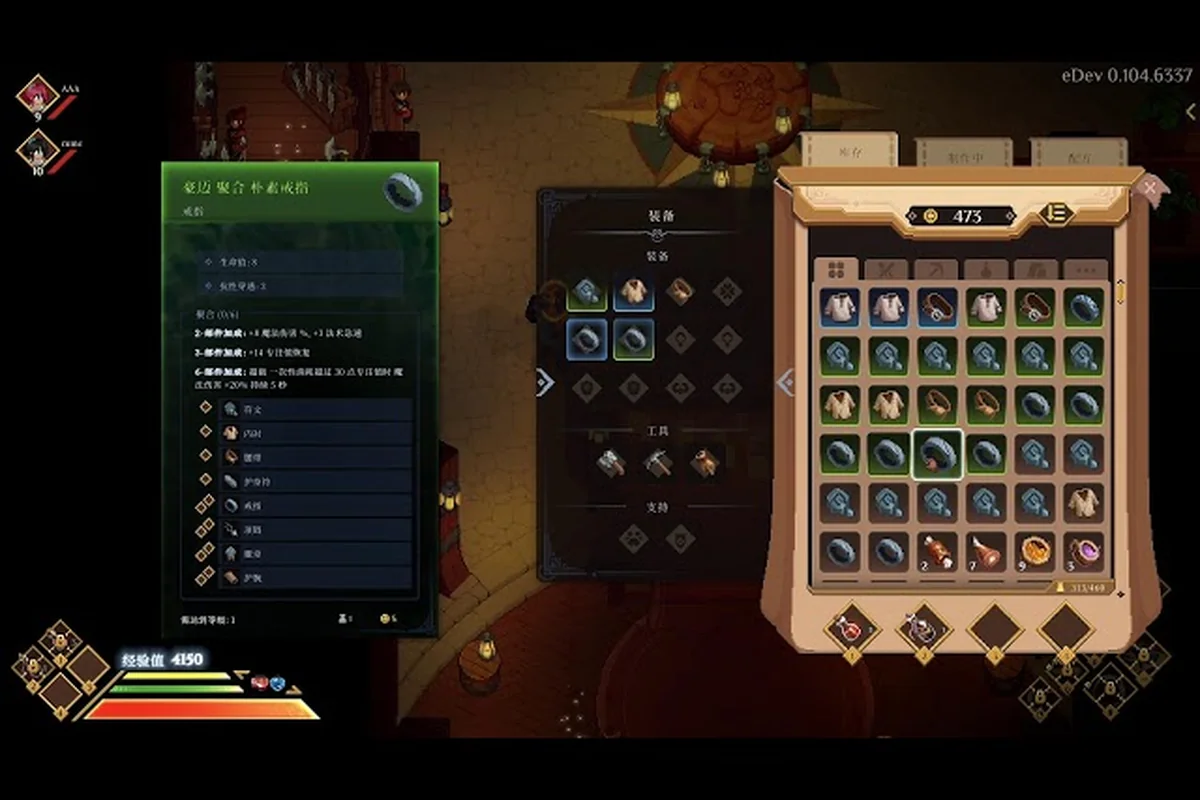
Gold runs through every system in Dimraeth — vendor recipes, stronghold upgrades, equipment rerolls, fast-travel tickets — and Early Access launches on September 15, 2026 with a level cap of 25 that pushes every coin you earn straight into the next gear tier. This Dimraeth money making guide breaks down the early-game gold farms, crafting resale loops, vendor shuffles, and inventory-management habits that compound into a healthy purse by the time Act 2 opens, so you spend less time grinding wolves and more time choosing where to invest.
Understanding Dimraeth's Early-Access Economy
Dimraeth's gold economy leans on three moving parts during the first 25 levels: monster drops, vendor resale margins, and crafting material-to-gold conversion. According to the official Dimraeth website, the world is built for 1–8 player co-op, which means the most efficient Dimraeth money making routes almost always involve at least one party member because drop tables scale with group size and the fastest farming zones are dense with respawns that a duo or trio can clear on a tight loop.
The single biggest mistake new players make during the Early Access window is treating gold as something to spend the moment it appears. The smarter play — confirmed in community testing reported by players on the official Dimraeth Discord — is to bank the first 800–1,200 coins, then push those reserves into a single high-yield investment (crafting bench unlock, bag slot expansion, or a low-level blue weapon from a vendor) that pays back within two play sessions.
Core Gold Sources at a Glance
| Source | Typical Gold/Minute (Solo) | Typical Gold/Minute (Co-op, 3P) | Effort | Resale Upside |
|---|---|---|---|---|
| Wolf dens outside Starter Hold | 35–45 | 80–110 | Low | Moderate (pelts + meat) |
| Bandit camps in Veiled Reach | 55–70 | 130–160 | Medium | High (gear drops) |
| Vendor resale (blue gear) | 20–30 | 20–30 | Low | Very high (markup 3–5x) |
| Crafting material grind | 25–40 | 60–90 | Medium | Very high (reforging loops) |
| Daily stronghold tribute | 40–60 (one-time) | 40–60 per character | Low | None (flat payout) |
Why Co-op Changes the Math
Dimraeth is handcrafted for 1–8 players, and the drop tables in the Steam listing for Dimraeth confirm that group play is the intended path for most content. Gold-per-minute nearly doubles in a balanced three-person party because the time-to-clear for a wolf den drops from 90 seconds to around 35, while loot rolls stay the same per kill. That ratio is what makes the early-game Dimraeth resource guide feel so different from a typical solo RPG grind.
If you only have access to solo play, the strategy shift is straightforward: pick narrower, denser farming routes and lean harder on crafting resale rather than raw coin drops. Players running solo report that the bandit camps are slightly less efficient without a tank, but the Wolfpack Hollow loop (covered below) holds its value because the respawn timer is short and the path back to the vendor is under 40 seconds.
Early-Game Gold Farms Worth Running Repeatedly
The first 8–10 hours of Dimraeth are dominated by the Veiled Reach and the forest belt south of Starter Hold. Three loops consistently show up in player-made gold spreadsheets, and they are the foundation of any Dimraeth money making guide worth its salt.
Wolfpack Hollow Loop (Levels 1–8)
Wolfpack Hollow is the cleanest starter farm. Wolves respawn every 90 seconds in solo play and every 60 seconds in a duo, each kill drops 8–14 coin plus a Wolf Pelt and a chance at Tough Sinew, both of which are vendor staples. The loop is tight: pull the southern pack, clear the northern pack, vendor reset, repeat.
| Step | Action | Time | Expected Gold |
|---|---|---|---|
| 1 | Pull southern wolf pack (4 mobs) | 15s | 40–55 |
| 2 | Clear northern wolf pack (5 mobs) | 20s | 55–70 |
| 3 | Loot + return to vendor | 35s | — |
| 4 | Vendor sell pelts/meat | 20s | 30–45 |
| Per cycle | ~90s | 125–170 |
A single-player cycle averages around 130 gold, which puts the loop at roughly 85–90 gold per minute before you factor in rare drops. According to community data shared on the Discord, rare drops — primarily Cracked Fangs and the occasional Forest Ring — push the realistic yield closer to 110 gold per minute over a 30-minute session.
Bandit Toll Road (Levels 6–12)
Once your character has a blue-tier weapon and a baseline bag, the Bandit Toll Road becomes the strongest pure-coin farm in the early game. Each bandit drops 15–25 coin, and the mini-boss at the camp's midpoint (a Tollmaster with a halberd) drops a blue-quality weapon or chest piece roughly 60% of the time. Those blues are the engine of the Dimraeth money making guide vendor shuffle, because you almost never want to equip them — you want to flip them.
Veiled Reach Chest Circuit (Levels 8–14)
The Veiled Reach is a handcrafted pixel zone with a dense scatter of lockable chests. According to players documenting routes in the Early Access beta, the chest circuit yields around 200–280 gold per full lap (12–14 chests), with a 20-minute respawn on the locked ones if you don't have a rogue-class lockpick. The chests also drop Veiled Shards, which are a crafting material detailed in the Dimraeth crafting guide and convert to vendor coin at a healthy rate.
Crafting Loops That Print Gold
Crafting is where the Dimraeth money making guide graduates from grinding to engineering. The crafting system, described in detail across our Dimraeth crafting leveling breakdown, lets you disassemble unwanted gear into materials and reforge pieces at the bench. The trick is to learn the margin between what a green-quality reforge costs and what the resulting blue-quality item sells for at a vendor.
The Reforge-and-Resell Pipeline
The pipeline is simple in concept, but the numbers are what make it work.
| Stage | Cost (Gold) | Expected Output | Vendor Resale Value | Net Profit |
|---|---|---|---|---|
| Disassemble 3x green items | 0 | 6–9 base materials | — | — |
| Reforge to random blue | 80 (bench fee) | 1 blue item, ~70% usable | 180–260 | 100–180 |
| Disassemble reforge failures | 0 | 3–5 materials back | — | Recovers ~30% of cost |
The bench fee is the choke point: at 80 coin per attempt, you need at least 90 gold in starting capital to make one reforge risk-safe. Community testing suggests that the success rate on a clean reforge is closer to 55% than 70% once you factor in weapon class restrictions, which is why most players bankroll the loop with a session of Wolfpack Hollow first, then move to the bench.
Alchemy and Potion Flips
Potions in Dimraeth are not consumables you spam during combat — they are a vendor commodity. The alchemy bench accepts two River Herbs and one Forest Mushroom to produce a Lesser Healing Tonic, which vendors buy back for 35–45 coin. Each craft costs around 10 coin in material value, so a batch of 10 tonics clears 250–350 coin in roughly 4 minutes of bench time, with no combat risk. The Dimraeth resource guide community treats this as the safest, most AFK-friendly gold source in the game, and it pairs well with a longer farm session because you can craft while moving between zones.
When to Stop Crafting and Start Spending
The Dimraeth money making guide isn't only about earning — it's about knowing when the marginal gold stops compounding. Three breakpoints are worth holding for:
-
Bag slot 3 unlock (cost: 400 coin) — pays for itself in roughly 25 minutes of farming once you stop making vendor trips to clear space.
-
Stronghold storage chest (cost: 850 coin) — turns crafting overflow into a real bank, which multiplies the value of every farm run.
-
Vendor reroll token (cost: 1,200 coin) — only worth it after you have a green or blue item you actually want to keep using.
Players who skip these unlocks and keep grinding raw coin consistently end up with the same purse three hours later but no compounding infrastructure behind it. The Dimraeth money making guide philosophy is to spend on infrastructure, then farm on top of it.
Vendor Runs, Inventory Tricks, and the Bag Problem
Inventory management is the silent gold sink of Dimraeth, and the right Dimraeth inventory guide habits save more coins than any farm. A full bag of mixed greens and crafting mats is the difference between a profitable session and a frustrating one, because every trip back to a vendor is a trip you aren't farming.
The 10-Slot Rule
The default bag is 12 slots, and most players fill it within 20 minutes of the first farm. The community-built Dimraeth inventory guide rule of thumb is to never carry more than 10 slots of mixed junk at any time — anything beyond that should be vendored immediately, with a hard floor on the items you bank.
| Item Category | Keep | Vendor | Reason |
|---|---|---|---|
| Green weapons below your level | No | Yes | Resale value > reforge value |
| Green armor with your class affinity | Yes | No | Reforge input for crafting loop |
| Crafting materials (River Herbs, Forest Mushrooms) | Stack to 20 | Sell excess | Used in alchemy flips |
| Blue gear (any slot) | Almost never | Yes | Vendor markup is the whole point |
| Locked chest keys | All | Never | Required for Veiled Reach circuit |
Vendor Refresh Timers and the Shuffle
Every vendor in Dimraeth has a hidden inventory that refreshes on a 20-minute real-time timer, and the longer you stay in a zone, the more the prices drift. The Dimraeth money making guide trick is to vendor-hop, not vendor-camp. A clean route looks like this: Starter Hold blacksmith (sell) → Veiled Reach reagent vendor (sell) → Bandit Toll Road quartermaster (buy low-blue gear for reforge) → return to blacksmith (sell reforge output). One full circuit, around 6–8 minutes, generates 300–450 gold net and resets every vendor's stock.
Equipment Decisions That Save Gold
The Dimraeth equipment guide angle is mostly about avoiding wasted upgrades. Early-game green gear becomes obsolete within 2–3 levels, and spending 60–120 coin to upgrade a piece that you'll replace in 90 minutes is a net loss. The rule players share most often: only upgrade blues, and only when the piece has a tertiary stat that matches your build (a Brawler wants Grapple Speed on chest pieces; a Magician wants Casting Distance on rings). The full picture of which stats matter for each class is covered in the Dimraeth starting guide, but the short version is: chase the tertiary stat, ignore raw numbers, and never upgrade a green.
Stronghold Tribute, Daily Resets, and the Passive Layer
Dimraeth's stronghold system, explained on the official site, turns into a passive gold source once you have a few resource buildings placed. Tribute is collected once per real-time day per character, and the payout scales with the number of completed buildings and the tier of each structure.
Daily Tribute by Stronghold Tier
| Stronghold Tier | Buildings Placed | Daily Tribute | Notes |
|---|---|---|---|
| Tier 1 (Starter) | 0–2 | 40 coin | Default state |
| Tier 2 (Settled) | 3–5 | 60–80 coin | Requires Granary + Workshop |
| Tier 3 (Fortified) | 6–8 | 100–130 coin | Unlocks Tribute Officer NPC |
| Tier 4 (Citadel) | 9+ | 150–200 coin | Adds Trade Caravan event |
The Tribute Officer is the real unlock — once placed, the NPC offers a 3-item vendor list that refreshes alongside the daily tribute, and one of the three slots is almost always a green or blue item at below-market price. The Dimraeth resource guide community considers the Tribute Officer a mandatory build because it converts daily play into guaranteed profit even on days you don't farm.
Trade Caravan Events
Once your stronghold hits Tier 4, a Trade Caravan event triggers roughly every 90 minutes of in-game time. The caravan offers bulk material purchases at 2–3x the normal vendor rate, which means a single load of Iron Ingots or Veiled Shards can clear 400–600 coin in one transaction. According to community testing reported in the Early Access beta channel, the caravan event is one of the highest gold-per-minute activities in the game, but it requires you to be online to trigger it, so it rewards longer play sessions more than quick logins.
How the Passive Layer Compounds
A fully developed Tier 4 stronghold generates roughly 200 coin in passive daily tribute plus an average of 500 coin in caravan events over a 2-hour session, for a total of around 700 coin without any combat. That is roughly equivalent to a 20-minute Wolfpack Hollow loop, and it stacks on top of whatever active farming you do. The Dimraeth money making guide philosophy here is the same as the crafting philosophy: build infrastructure, then farm on top of it. Stronghold-first players consistently report ending their Early Access week 1 with 3,000–4,000 more gold than combat-first players at the same playtime, because the passive layer keeps paying out even when they're offline.
Frequently Asked Questions
What is the fastest gold farm for the first 5 levels in Dimraeth?
The Wolfpack Hollow loop is the fastest because the respawn timer is short and the vendor reset trip takes under 40 seconds. A solo player can clear 800–1,000 gold in the first hour, and a duo can hit 1,500–1,800 gold in the same window by chaining the southern and northern packs without pause. The drop table favors pelts and sinew, both of which are vendor staples, so there is almost no wasted inventory.
Should I spend gold on bag slots or crafting bench upgrades first in Early Access?
Bag slots are the better first purchase because the Dimraeth inventory guide rule of thumb is to keep at least 2 free slots at all times to avoid losing rare drops. The third bag slot unlock costs 400 coin and pays for itself within 25 minutes of any farm. The crafting bench is a strong second purchase, but only after you have at least 800–1,000 coin banked, because the reforge loop needs startup capital to be risk-safe.
Is crafting actually better than farming for gold in Dimraeth?
Crafting is more gold-per-minute, but it is not strictly better than farming. The reforge-and-resell pipeline nets 100–180 coin per attempt at the bench, while the bandit camps net 130–160 coin per minute in combat. The honest answer is that the two feed each other: farming fills the bench with materials and starter gold, and the bench converts overflow into bankroll. Players who only farm spend too much time vendoring; players who only craft run out of materials within 20 minutes.
What should I do with blue items I don't want to equip?
Vendor them. Blue items in Dimraeth are almost never worth keeping for a future character because the reforge system produces fresh blues at a steady rate, and the vendor resale margin is the entire point of the Dimraeth money making guide vendor shuffle. The only exception is a blue with a tertiary stat that matches your build — those are worth banking until the Dimraeth equipment guide reroll system unlocks at level 20, which is when tertiary stats start mattering more than raw item level.
How does the Early Access level cap of 25 affect my money making strategy?
The level 25 cap means most of your gold goes into Act 1 infrastructure rather than Act 2 prep, which is why the Dimraeth money making guide emphasizes stronghold tier, bag slots, and bench upgrades over hoarding consumables. When Mudtek raises the cap with each new act, gold sources will scale, but the infrastructure investments you make now will still be paying back two acts from now. Focus on the systems that compound, not the loot that gets replaced.