
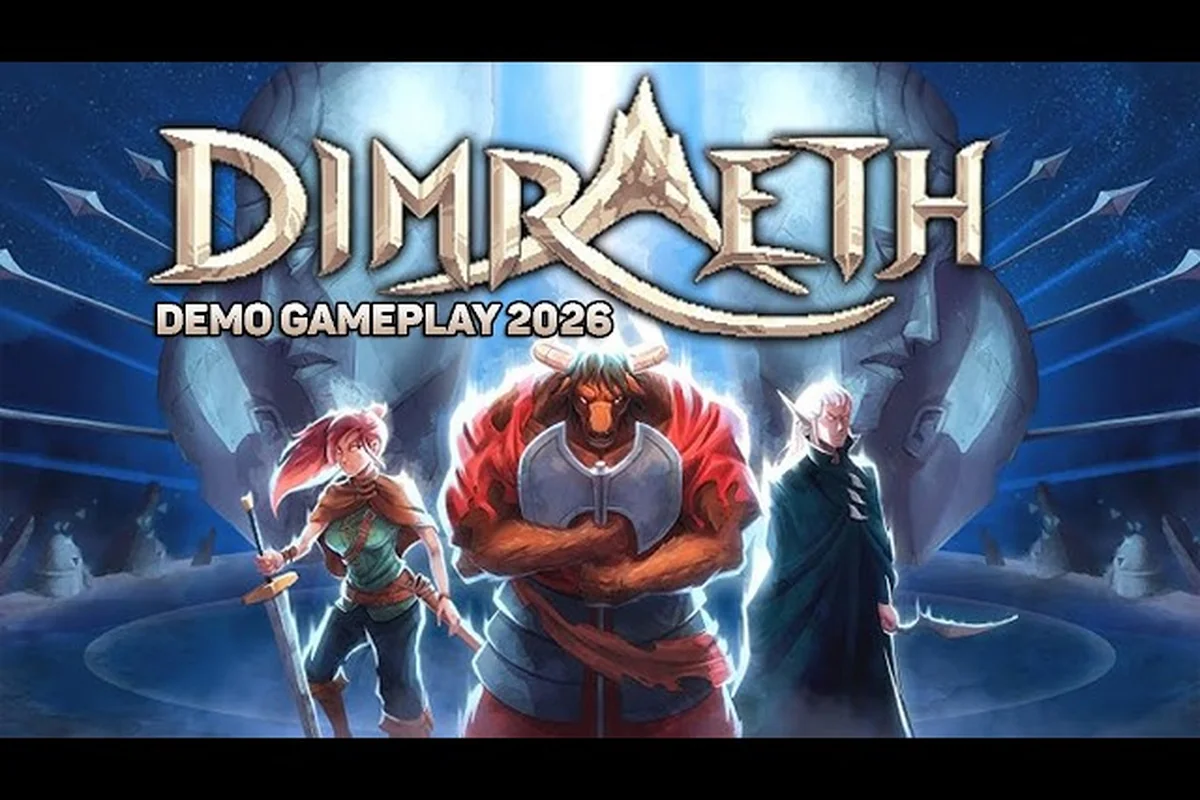
Dimraeth ships Early Access on September 15, 2026 with 48 distinct Archetype trees — and every single one of them changes how the seven Dimraeth class skills and Dimraeth class spells feel in your hands. Race plus class defines your Archetype, and each Archetype hands you a private skill tree full of exclusive passives and archetype-locked spells. Picking the right tree before you dump hours into the level 25 cap is the single biggest lever for a smooth launch run.
How the 48 Archetype Trees Are Built
Before you can compare builds, you need to understand what an Archetype actually is. The Mudtek developer site describes the system as a fusion of race and class — your eight races and six classes cross to produce 48 unique combinations, and each one is a self-contained skill package. There is no shared talent grid, and the spells you can learn are gated by your Archetype choice, not by your level alone.
Race-Class Multipliers Shape the Whole Tree
The most overlooked detail in the entire Archetype system is that race-class combinations change your attribute XP scaling cost. A Fairy Magician pays more XP to put a single point into Strength than a Minotaur Brawler pays for the same point, because the game applies a per-race multiplier to each primary attribute. The Mudtek site calls out the Minotaur Brawler specifically — that combo gets a primary attribute passive that grants bonus stamina every time you level Strength.
This matters for dimraeth class attribute requirements more than any other Early Access system. If you are building a Magician and your race is not naturally aligned with Intelligence, you will feel the XP tax on every attribute node you want to push. Plan the tree before you plan the gear, because the tree cost is fixed and gear can be swapped.
| Race | Natural Attribute | Class Synergy | XP Cost on Off-Spec |
|---|---|---|---|
| Minotaur | Strength | Brawler, Defender | High on Intelligence |
| Fairy | Intelligence | Magician, Cleric | High on Strength |
| Human | Balanced | Any class | Neutral (baseline) |
| Elf | Agility | Ranger, Shadow | High on Vitality |
| Orc | Strength, Vitality | Brawler, Defender | High on Intelligence |
| Dwarf | Vitality | Defender, Cleric | High on Agility |
| Beastfolk | Agility, Strength | Brawler, Ranger | Moderate across all |
| Undead | Intelligence, Vitality | Shadow, Cleric | High on Strength |
Archetype-Exclusive Spells and Passives
Every Archetype tree has two layers: passives that fire automatically when their conditions are met, and archetype-exclusive spells that no other race-class combo can learn. The official Steam page notes that the game ships 300+ total spells with five equip slots, but the Archetype-locked spells are the ones that define your identity. A Magician's fireball feels different from a Shadow's fireball because the Archetype tree adds a passive on top that no other class can stack.
For dimraeth archetype builds, this is the core decision. You are not picking a class, you are picking which private spell list and which passive package you want to live inside for the next 25 levels — because the Archetype tree (rather than race) decides whether your Mage spends endgame stacking the Magician's ignite-spreading Combustion Mastery passive or the Shadow's crit-scaling Veiled Embers, and the racial attribute thresholds for those spell unlocks are completely different. Choosing Archetype first, then re-rolling race to meet its stat gate, is also the standard workaround covered in every dimraeth class reroll guide.
Dimraeth Class Spells: Universal Magic vs Archetype Spells
The spell ecosystem in Dimraeth splits into two clear buckets, and confusing them is the most common Early Access mistake. Universal magic is craftable into spellbooks through the crafting system, but each spellbook has its own attribute gate — the Dimraeth spellbook guide covers the five-slot loadout rules. Archetype spells are learned automatically as you level inside your Archetype tree.
Universal Magic and the Spellbook Gate
Universal magic is the cross-class toolbox. According to the official Steam description, you can craft spellbooks for universal spells, but they are gated by dimraeth class attribute requirements — your equipped class must meet the attribute threshold or the spellbook is unusable. This is why a Brawler cannot just learn a high-tier heal even with the right materials; the attribute gate blocks the equip.
This system rewards you for sticking to your Archetype identity during the first 25 levels. The five-slot loadout fills naturally with Archetype spells at first, and you can only slot universal spells when your attributes qualify. Trying to build a hybrid too early usually means half your slots are locked behind unmet gates.
Archetype-Locked Spells and Why They Scale Better
Archetype spells scale with both your class level and your Archetype tree depth. Because passives in the same tree multiply the damage, cooldown, or utility of those locked spells, an Archetype spell at tier 3 in a fully unlocked branch will out-damage a universal spell of the same tier almost every time. Community testing shared across the Mudtek Discord channels confirms this scaling pattern in the pre-release beta.
The trade-off is flexibility. You only get 48 Archetype choices at launch, and if you pick one that does not click with your playstyle, the locked spells become a sunk cost. That is where the dimraeth class reroll guide comes in, and we will cover it below.
Dimraeth Best Archetype Picks for Early Access
With 48 trees, the smart move is to start with a shortlist. These picks come from a mix of developer notes, beta community data, and the practical reality of a level 25 cap at launch. They are the strongest candidates for dimraeth best archetype status in solo and small-group play.
Top Solo Archetypes
Solo play rewards self-sufficiency, sustain, and the ability to handle elite enemies without backup. The Minotaur Brawler remains the strongest solo melee pick because of the Stamina passive on Strength leveling — you can chain grapple combos without running dry. The Fairy Magician is the strongest solo ranged pick because the Intelligence scaling on the Magician trunk stacks with the Fairy's natural Intelligence affinity, making fire and lightning Archetype spells hit harder earlier.
| Archetype | Role | Strongest Spell Branch | Best Stat to Push |
|---|---|---|---|
| Minotaur Brawler | Melee DPS / Tank | Grapple Branch | Strength |
| Fairy Magician | Elemental DPS | Fire Trunk | Intelligence |
| Human Defender | Hybrid Tank | Shield Wall Branch | Vitality |
| Elf Ranger | Ranged Kiter | Mobility Branch | Agility |
| Orc Brawler | Burst Melee | Pressure Branch | Strength |
| Undead Shadow | Burst Caster | Debuff Branch | Intelligence |
Top Co-op Archetypes
Co-op changes the math because you no longer need to cover every role yourself. The Cleric archetype shines when a second player can hold aggro, because heal-over-time passives stack with the party's damage uptime. The Magician remains strong in groups but shifts from raw fire power to elemental control — ice and lightning become force multipliers when the Brawler is pinning enemies down.
For dimraeth new class early access players specifically, the safest first pick is whichever Archetype in the table above matches the role your group is missing. A four-player squad that already has a Brawler and a Magician should round out with Cleric and Ranger, not double-stack on damage.
Class Reroll Guide: When and How to Switch
Rerolling in Dimraeth is not free, and the cost curve is steep the further you push into the level 25 cap. The dimraeth class reroll guide boils down to three rules, but the math behind the bill is what catches most players off guard: each refunded Archetype node returns only 60% of the XP you spent, the percentage drops to 45% past level 15, and the racial attribute tax (see the dimraeth class attribute requirements table) stacks on top, so a Minotaur swapping into a cloth-wearing Caster tree can lose 40% of the refund in multiplier penalties alone.
First, do not reroll before level 10. The first ten levels of an Archetype tree are the cheapest to abandon because you have not unlocked the expensive passive tiers yet. If you are going to switch, do it inside that window or you will eat the cost.
Second, check your attribute gates before rerolling. If your new target Archetype requires Intelligence and your current race is Minotaur, you will pay the XP tax for every node. Sometimes the reroll is the wrong move not because the class is bad, but because the race-class multiplier is hostile to the build.
Third, respect the level 25 cap. The Early Access launch caps at level 25, and the Archetype trees are tuned around hitting tier 3 of one branch and tier 2 of a second by the time you cap. Rerolling at level 20 is almost never worth it because you cannot recoup the tree depth in the remaining levels.
| Reroll Timing | Cost | Recommended? |
|---|---|---|
| Levels 1-9 | Low | Yes, if the Archetype does not click |
| Levels 10-19 | Medium | Only if switching into a race-aligned Archetype |
| Levels 20-25 | High | Almost never worth it |
Dimraeth Class Skills by Branch Type
Every Archetype tree follows a three-branch structure, and understanding the branches is the fastest way to read any dimraeth class skills tree you have not seen before. The three branch types are pressure, defense, and utility, and they show up across every class with the same logic.
Pressure Branches
Pressure branches add damage uptime. For Brawlers this is the chain-combo branch that extends the stun window on grapple hits. For Magicians it is the elemental mastery trunk that boosts fire and lightning Archetype spell damage. Pressure branches are the most popular first pick because the damage numbers are obvious, but they are also the most expensive to max out.
Defense Branches
Defense branches are where most players under-invest. The Defender's Shield Wall branch, the Cleric's aura branch, and the Shadow's evasion branch all live in this category. They do not show up in damage meters, but they are the reason a group can clear a world boss instead of wiping. For solo play, defense branches are often the better first max because you cannot lean on a healer.
Utility Branches
Utility branches are the small-but-decisive layer. They include cooldown reduction on archetype-exclusive spells, stamina regen passives, and the cross-class synergy passives that buff your party. The dimraeth new class early access community has been loudest about utility branches because they are the layer that changes a build from "good" to "memorable."
| Branch Type | Solo Value | Co-op Value | Typical Cost |
|---|---|---|---|
| Pressure | High | High | Most attribute points |
| Defense | Highest | Medium | Mid attribute points |
| Utility | Medium | Highest | Fewest points, biggest payoff |
Building Around the Race-Class Multiplier
The single most powerful optimization in dimraeth archetype builds is choosing a race that natively supports your class's primary attribute. A Brawler with Minotaur, Orc, or Beastfolk ancestry pays the baseline XP cost to raise Strength, while a Fairy Brawler pays a steep premium for the same node. Over 25 levels, that premium adds up to multiple lost passive tiers.
For Magicians, the Fairy and Undead races are the natural fits. For Rangers, the Elf and Beastfolk give you the cleanest Agility curve. For Defenders, the Dwarf and Orc are the strongest pairings because Vitality scales on the same multiplier as Strength. For Shadow and Cleric, Human is the safe neutral pick that lets you push any attribute without the race tax.
This is also where dimraeth class attribute requirements stop being a wall and start being a guide. The attribute gates on universal spellbooks are not arbitrary — they are tuned around the assumption that a race-class aligned build should be able to slot them, while a misaligned build will be locked out until late game.
Frequently Asked Questions
How many Archetype trees are in Dimraeth at Early Access launch?
At Early Access launch there are 48 Archetype trees, one for each race-class pairing across the eight races and six classes, and every tree keeps its own internal layout so no two share node positions. Because trees are locked to a specific race-class combination, the Minotaur Brawler path and the Fairy Magician path will never overlap with another archetype's passives, and cross-archetype learning is only possible through the universal magic spellbooks tied to your equipped class — which is why committing early to one tree is the most efficient way to climb the 8-tier passive ladder before the level 25 cap.
What is the level cap during Early Access?
The level cap is 25 at EA launch, and it will rise with each new act added after launch. The Archetype trees are tuned so that a focused build can reach tier 3 of one branch and tier 2 of a second branch before the cap.
Can I learn spells from another class?
Only through universal magic spellbooks, and each spellbook has its own attribute gate tied to your equipped class. Archetype-locked spells cannot be learned outside the matching race-class combination, which is the core reason that the dimraeth class spells system rewards commitment to one tree.
When should I reroll my class?
Between levels 1 and 9 is the cheapest window. Rerolling at level 20 or above is almost never worth it because you cannot recoup the lost tree depth before the level 25 cap, and you will also lose the passives you already unlocked.
Which Archetype is strongest for solo beginners?
The Minotaur Brawler for melee players and the Fairy Magician for ranged players. Both pair a natural attribute affinity with a class whose best Archetype spells scale early, which smooths out the first 10 levels when gear is still thin.