
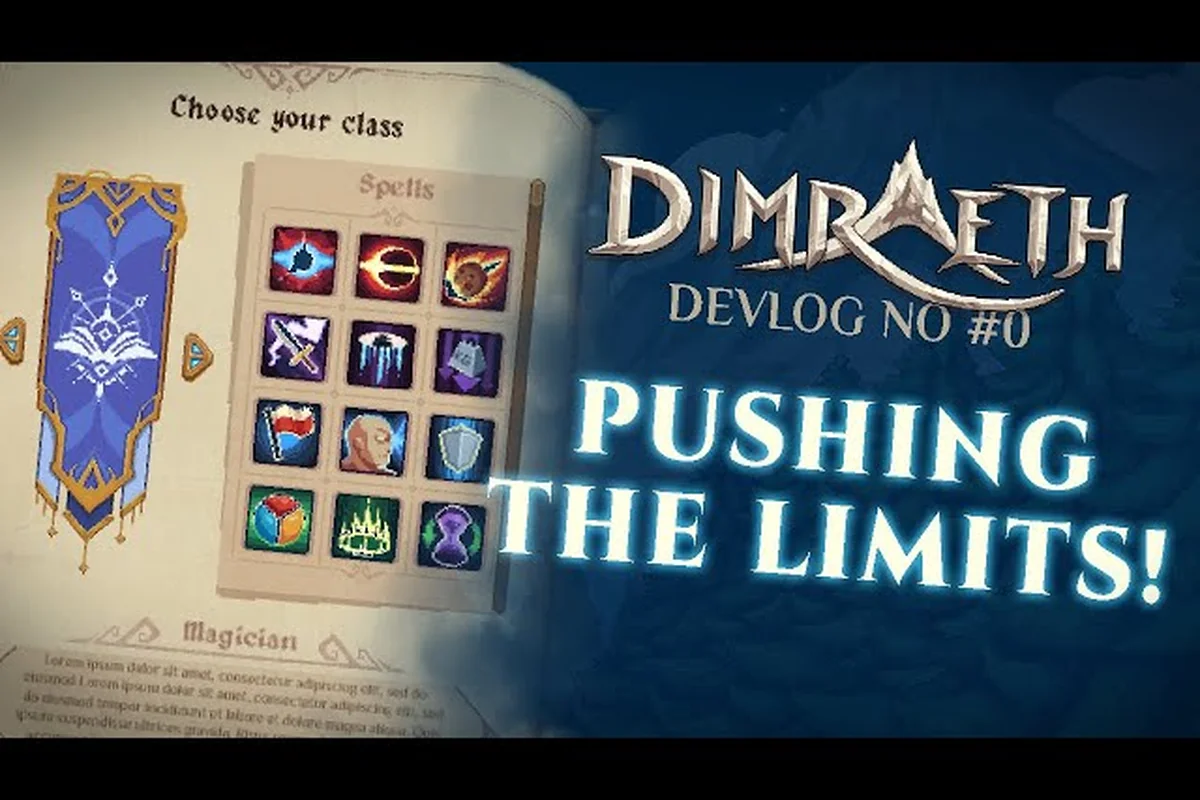
Magic is the most flexible archetype in Dimraeth, and the class skill tree reflects that. If you have ever asked whether a caster can really solo an elite, hold aggro in a four-man co-op squad, or pivot from a nuker into a healer mid-fight, the answer lives inside this Dimraeth magic class guide. The Magician line blends fire, ice, and lightning strikes with a one-handed catalyst or off-hand weapon, which means every decision you make on the skill tree changes how the class feels in combat. According to the official Dimraeth website, the class is designed around the Souls-lite stamina loop: read the telegraph, spend stamina on a cast or swing, then recover before committing again. That design is exactly why the magic class is more than a "stand back and throw spells" archetype — it is a hybrid, a damage dealer, and a support tool all at once.
What Makes the Dimraeth Magic Class Different
The Magician class is the only base archetype in Dimraeth that can equip all three elemental damage types without a special unlock. The Dimraeth Steam page lists 300+ total spells across the game, and the magic class is the only class that starts with cross-element access from level 1. The trade-off is that every spell you slot has a stamina cost, so a "more spells" mentality will run you dry in a single boss phase. A disciplined build philosophy is non-negotiable.
Core Identity: Hybrid Caster, Not Pure Mage
The magic class blends elemental magic with weapon strikes, which means the Five Spell Slots you carry into combat are only half your damage kit. The other half is your catalyst's light attack, your dodge cancel, and your parry. Players who treat the class like a traditional ranged caster get crushed by stamina depletion; players who treat it like a melee fighter ignore the elemental kit entirely. The sweet spot is alternating between a fast light swing, a stamina-light spell, and a parry that refunds a portion of the cost on a successful counter. The dimraeth magic class guide framework starts here: combo, cast, recover, repeat.
Why This Class Scales into Late Game
Because every spell is gated by attribute requirements rather than a single class tree, late-game magicians can wear medium armor, dual-wield catalysts, or even slot a shield for emergency block. That is why a thorough dimraeth class skill tree walkthrough is the backbone of long-term progression — you are not locked into one role. The table below breaks down the four most common magic-class identities you will see in co-op and solo play.
| Build Identity | Primary Role | Key Stats | Common Spell Mix | Best Game Phase |
|---|---|---|---|---|
| Arcane DPS | Burst damage | Intelligence, Attunement | Fire + Lightning | Boss fights, dungeons |
| Support Caster | Healing, shields, buffs | Wisdom, Resolve | Ice + Utility | Raids, co-op elites |
| Tank Caster | Aggro + stagger | Vitality, Endurance | Ice + Lightning | Frontline, world bosses |
| Hybrid Caster | Mixed DPS and utility | Balanced spread | Fire + Ice + Lightning | Solo open-world, exploration |
The dimraeth support class guide archetype focuses on Wisdom scaling, while the dimraeth tank class guide archetype stacks Vitality so a heavy shield can hold aggro while ice spells lock down adds. The dimraeth dps class guide archetype is the burst build most players try first, and the dimraeth hybrid class guide archetype is what experienced soloists fall back on when the team comp shifts.
Dimraeth Elemental Class Guide: Fire, Ice, and Lightning in Practice
The three elements in the magic class are not cosmetic labels — they carry distinct stagger values, status effects, and stamina curves. Choosing the right element for the encounter is half the magic class skill tree conversation. According to community testing compiled in Mudtek's official YouTube channel, fire is the highest raw damage per cast, ice is the strongest crowd control, and lightning has the fastest cast time and chain potential. The Dimraeth spellbook guide goes deeper on crafting the universal spellbooks, but here is how each element plays in real combat.
Fire Spells: The Raw Damage Pillar
Fire spells cost the most stamina per cast but deliver the highest single-target burst. The signature Ignition Burst spell consumes 28 stamina and applies a 4-second burn that ticks for 18% of the initial hit. Because fire ignores a portion of enemy frost armor, it is the go-to element against ice-resistant elites in the Frostmere region. The downside is that fire has the longest cast animation, so telegraph windows are tight.
-
Best against: Frost-armored elites, single boss phases
-
Worst against: Fire-resistant bosses, multi-add encounters
-
Stamina curve: Heavy (24-32 per cast)
-
Status synergy: Combines with lightning for the Overload proc
Ice Spells: The Crowd Control Pillar
Ice spells are slower per-hit than fire but apply a Frostbite slow that reduces enemy attack speed by 22% for 5 seconds. The signature Glacial Lance spell is a 22-stamina piercing projectile that hits up to three targets in a line, which makes it the best magic-class option for clearing trash packs. In a four-man co-op squad, one ice mage can lock an entire wave while the Brawler finishes the survivors.
-
Best against: Trash packs, fast melee adds
-
Worst against: Heavily insulated bosses, isolated single targets
-
Stamina curve: Medium (18-26 per cast)
-
Status synergy: Combines with fire for the Shatter proc
Lightning Spells: The Speed and Chain Pillar
Lightning spells are the cheapest and fastest in the kit. The signature Arc Spark spell costs only 14 stamina and can chain to a second enemy within 8 meters. The single-target damage is lower than fire, but the chain makes lightning the best add-clear element in open-world exploration. The dimraeth dps class guide archetype almost always leads with lightning in the open world and switches to fire for boss kill phases.
-
Best against: Clustered adds, fast open-world farming
-
Worst against: Lone bosses, lightning-resistant targets
-
Stamina curve: Light (12-18 per cast)
-
Status synergy: Triggers Overload when applied to a burning target
Status Proc Cheat Sheet
| Proc Name | Trigger Condition | Bonus Effect | Best Element Pair |
|---|---|---|---|
| Overload | Lightning on burning target | +35% burst damage, area stun | Fire + Lightning |
| Shatter | Fire on frostbitten target | Ignites the slow, breaks stagger | Ice + Fire |
| Conduit | Ice on shocked target | Freezes the chain, refunds 8 stamina | Lightning + Ice |
| Singed Ground | Fire AOE on wet terrain | Lingering 6-second burn zone | Fire + Ice (utility) |
If you are running the dimraeth hybrid class guide archetype, you will trigger two of these procs in most fights — typically pairing Overload with Shatter or Conduit with Singed Ground, depending on the enemy elemental state — and that double-proc window is the real reason hybrid builds feel so fluid in solo play, since the Stamina refund from Conduit and the 6-second burn zone from Singed Ground can both fire on the same encounter, letting you sustain rotations without dipping into your backup skill tree cooldowns.
The Five Spell Loadout: Choosing What Actually Goes into Combat
Every player in Dimraeth can only equip five spells at a time out of the 300+ available, and the magic class has the deepest bench of any archetype. The five slots are: three combat spells, one utility spell, and one signature spell. Choosing the wrong mix will leave you with empty stamina bars and no crowd control, so the loadout is the second pillar of any dimraeth magic class guide.
Slot 1-3: Combat Spells (Pick from Your Element Trifecta)
The first three slots are your bread-and-butter damage. A standard dimraeth dps class guide loadout runs Ignition Burst, Glacial Lance, and Arc Spark so that no encounter is unanswerable. If you are running a pure support loadout, swap Ignition Burst for a shield spell and keep Glacial Lance as your only damage option. The hybrid caster will carry two elements and one utility combat spell such as a Frost Trap or a Lightning Mine.
Slot 4: Utility Spell (Defensive or Mobility)
The fourth slot is where the magic class diverges from a pure caster, and this divergence is what makes the dimraeth hybrid class guide discussion so relevant here. Unlike Slots 1–3 where raw spell scaling dominates, this slot is scored against your defensive HP pool, stamina regeneration from gear, and the encounter's incoming burst pattern. Dimraeth's elemental class framework treats this as a "trade-off node," so a 40% damage reduction root (Earthen Bind) only outperforms a flat shield (Mana Veil) when the boss's hit lands inside the root window — otherwise you wasted 4 seconds of mobility for a buff that never triggered.
-
Mana Veil: 5-second damage shield that absorbs one hit per pulse, costs 18 stamina
-
Phase Step: 6-meter teleport on a 1.5-second cooldown, costs 22 stamina
-
Earthen Bind: Roots the caster for 4 seconds but grants 40% damage reduction
-
Cleanse Aura: Removes one debuff from all allies within 8 meters, costs 25 stamina
Solo players almost always take Phase Step because it doubles as a dodge and a reposition tool. Co-op support casters take Cleanse Aura because the magic class can be the only healer archetype in a group if you spec into it.
Slot 5: Signature Spell (Class-Defining Burst)
The fifth slot is locked to a class-specific signature that no other archetype can equip, and for the magic class it rotates between three options tied directly to your attribute investment. Because each spell demands a different primary stat threshold—Intelligence for Meteor Fall, Wisdom for Winter's Embrace, and Resolve for Stormcaller—your early build path effectively chooses your capstone before you ever slot the spell, forcing the dimraeth magic class guide to be read as a trilogy of hybrid, elemental, and support pivots rather than a single linear progression.
| Signature Spell | Attribute Gate | Stamina Cost | Effect |
|---|---|---|---|
| Meteor Fall | Intelligence 40+ | 45 | 250% AoE damage, 2-second cast |
| Winter's Embrace | Wisdom 40+ | 38 | 6-second group-wide shield, slow immunity |
| Stormcaller | Resolve 35+ | 42 | 12-second lightning storm in 10m radius |
Meteor Fall is the dimraeth dps class guide capstone, Winter's Embrace is the dimraeth support class guide capstone, and Stormcaller is the magic class skill tree's hybrid capstone. The class skill tree is the only place where you unlock the attribute thresholds to actually equip these, which is why a clean skill tree path matters more than gear in the first 30 levels.
Dimraeth Class Skill Tree: How to Spend Your Points
The magic class skill tree branches into three trunks — Elemental Mastery, Arcane Defense, and Caster Combat. Each trunk has 12 nodes, and you get one point per level up to 60, plus 8 bonus points from class quests. The dimraeth class skill tree is the most flexible in the game because you can refund any single branch for a small gold cost, which lets you experiment without restarting. According to community testing reported by players on Mudtek's Discord, the most efficient first-30-level path focuses on one trunk and a single capstone in a second trunk, rather than spreading thin across all three.
Elemental Mastery Trunk (Damage Branch)
This trunk boosts raw spell damage, status proc chance, and reduces elemental cooldowns. The capstone, Elemental Conduit, makes all three procs trigger at 18% increased rate, which is the build-defining node for the dimraeth dps class guide archetype. Spend 9 of your first 12 points here if you are running a damage role.
Arcane Defense Trunk (Survivability Branch)
This trunk adds a flat mana shield, status resistance, and stamina regeneration on cast. The capstone, Reflective Ward, returns 12% of damage taken as a 4-second spell shield. The dimraeth support class guide and dimraeth tank class guide archetypes both lean on this trunk, and the dimraeth hybrid class guide archetype takes 3-4 nodes here for sustain.
Caster Combat Trunk (Hybrid Branch)
This trunk is unique to the magic class and rewards weapon strikes between casts. The capstone, Spellblade Echo, causes every third light attack to refund 8 stamina. That is the single most important node for solo players who rely on the class's hybrid identity, and it is the reason the dimraeth magic class guide exists as a separate archetype from a generic ranged caster.
Recommended 30-Level Skill Tree Paths by Role
| Role | Elemental Mastery | Arcane Defense | Caster Combat | Notes |
|---|---|---|---|---|
| DPS | 9 | 2 | 1 | Damage-first, capstone rush |
| Support | 2 | 9 | 1 | Survivability + cleanse |
| Tank Caster | 1 | 8 | 3 | Aggro + stagger control |
| Hybrid | 5 | 3 | 4 | Even spread, capstone in two trunks |
Stamina-Aware Rotations for Solo Arcane and Support Caster Play
Every magic class rotation comes back to one rule: never cast two heavy spells in a row. The stamina regen window is 1.4 seconds, so chaining heavy spells will lock you out of dodging the next telegraph. The dimraeth magic class guide canon for solo arcane is a 3-2-1 pattern: 3 light attacks, 2 light spells, 1 signature spell, then back off.
Solo Arcane Rotation (PvE Open World)
-
Open with Arc Spark to tag the group and trigger the lightning chain.
-
Light attack twice during the cast animation cancel to refund stamina.
-
Glacial Lance to apply Frostbite on the survivor.
-
Ignition Burst on the frostbitten target to proc Shatter.
-
Phase Step out of the telegraph window and re-engage.
-
Spend remaining stamina on Meteor Fall if the elite is staggered.
Support Caster Rotation (Co-op 4-Man)
-
Pre-fight, drop Cleanse Aura on the Brawler.
-
Winter's Embrace at the pull so the group starts with a shield.
-
Glacial Lance on the wave to lock the adds.
-
Light attacks between casts to keep the Spellblade Echo refund rolling.
-
Cleanse Aura on cooldown to strip debuffs from the front line.
-
Hold Meteor Fall for the boss phase transition.
The dimraeth support class guide rotation is forgiving because the role is reactive rather than proactive, but the dimraeth tank class guide rotation is the opposite: you are the one initiating, so your stamina budget has to cover the aggro pull, the ice crowd control, and the shield proc all in the first 6 seconds. Players who run the dimraeth hybrid class guide role switch between the two rotations based on whether the squad has a dedicated healer.
Frequently Asked Questions
Is the magic class viable as a solo class in Dimraeth?
Yes, and it is one of the strongest solo archetypes because the Spellblade Echo capstone and the Five Spell Slots system let you cover damage, crowd control, and escape in a single kit. The dimraeth hybrid class guide archetype is built around this exact playstyle, and most solo players end up running it after a few hours of play.
How do I unlock the Magician class in Dimraeth?
You unlock the magic class by completing the introductory quest at the Mage Tower in the starter hub, which is available to every race. If you want the best racial pairing, the Dimraeth racial abilities guide covers which race traits stack best with the magic class skill tree, but the unlock itself is not race-gated.
Can the magic class really tank in co-op?
It can, but only as a "tank caster" hybrid using the Arcane Defense trunk and a shield in the off-hand. A pure magic tank will lose aggro to a Brawler with proper threat generation, so the dimraeth tank class guide build works best in a three-man squad without a dedicated tank.
What is the best magic class build for beginners?
Beginners should start with the dimraeth dps class guide archetype using fire and lightning, then refund into the hybrid path after they hit level 30. The class skill tree refunds are cheap enough that you will not lose meaningful progress, and the Dimraeth best class tier list is a useful cross-reference if you want to compare the Magician to the Brawler and Shadow lines.
Does the magic class work with the new difficulty tuning?
It does, and the recent skill tree changes in the Dimraeth difficulty guide actually buffed the Spellblade Echo capstone by 6%. If you are coming back after a patch, check the patch notes first because the magic class has been the most frequently adjusted archetype in the game.