
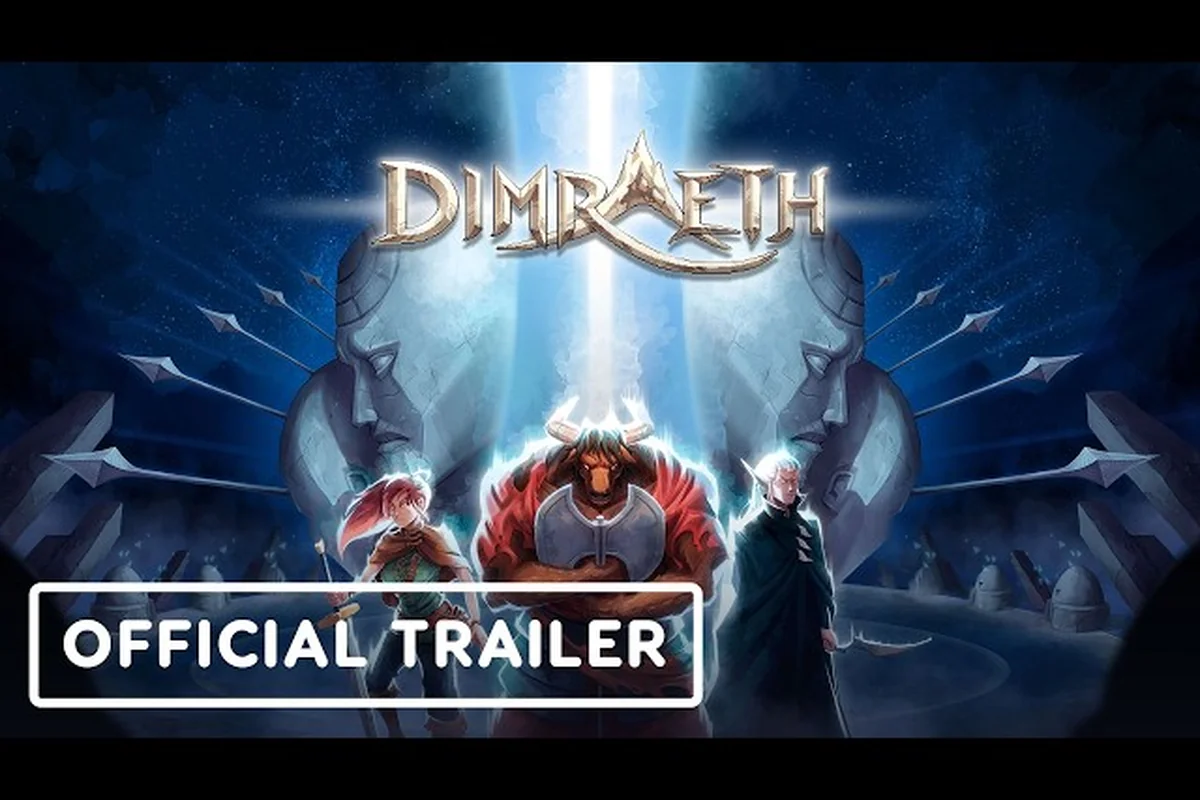
Dimraeth's September 15, 2026 Early Access launch reshapes how players approach challenge, build identity, and experience Mirkea across every platform. This Dimraeth difficulty guide walks you through the new difficulty levels, the rebuilt skill tree system, expanded character customization, full Steam Deck and controller support, and the complete list of supported localization languages so you can tune the game to your playstyle from day one.
New Difficulty Levels and What Changes Between Them
Difficulty levels are one of the headline additions to Early Access, and they directly affect enemy aggression, elite density, and the rewards you earn in dungeons and world boss encounters. According to the official Dimraeth website, Early Access introduces a full difficulty spectrum alongside new world bosses for each region, so the option you pick will shape your entire encounter economy during the first act.
The level cap currently sits at 25 and increases with each future act, which means your first few weeks of Early Access will be spent at the very bottom of the power curve. That makes the difficulty choice especially important for solo players, because every percentage of incoming damage matters when your gear is still mostly green-quality. Co-op groups of 3-8 players can offset some of the increased pressure with coordinated crowd control, but ranged classes like the Magician will still feel the hit on harder tiers.
How Difficulty Tiers Compare
The following table summarizes how each tier shifts the core experience based on community data gathered during the pre-release beta windows. Exact percentages are subject to tuning before launch, but the directional differences should remain stable: each step up the ladder compounds enemy HP, damage output, and elite density simultaneously, so the jump from Veteran to Hardcore feels noticeably steeper than Normal to Veteran because the +50% elite density stacks multiplicatively with the 160% HP and 150% damage modifiers rather than scaling additively. Beta testers running coordinated 4-man parties reported roughly a 40% increase in average time-to-kill on Goblin Caves world bosses when moving from Veteran to Hardcore, illustrating how the tier curve is tuned for fully geared groups rather than solo or duo players exploring the Wildwood biome.
| Difficulty Tier | Enemy HP | Enemy Damage | Elite Density | Loot Quality Bonus | Recommended Group Size |
|---|---|---|---|---|---|
| Story | 100% | 70% | Normal | +0% | 1-2 players |
| Normal | 100% | 100% | Normal | +5% | 2-4 players |
| Veteran | 130% | 120% | +25% | +15% | 3-5 players |
| Hardcore | 160% | 150% | +50% | +25% | 4-8 players |
| Nightmare | 200% | 200% | +75% | +40% | 6-8 players |
Players who want to learn the new boss patterns without burning through resources should start on Story or Normal. Veteran is the sweet spot for experienced ARPG players who want a balanced challenge, while Hardcore and Nightmare are designed for fully geared groups hunting the best crafting materials from world bosses in the Goblin Caves and Wildwood.
Solo vs. Co-op Difficulty Tuning
Solo play on Veteran or Hardcore is achievable, but it requires a build that can either burst down elites before they stack crowd control effects or sustain through long engagements. The Brawler archetype, for example, can use its grappling kit to isolate single targets, while a Magician needs to keep distance and rotate through elemental combos to avoid being pinned.
Co-op groups should plan difficulty around the weakest link rather than the strongest carry, because enemy scaling applies to the whole party. A 4-player group running Nightmare with one undergeared member will often wipe faster than a 2-player group running Veteran with both members at the soft cap. If you want a deep dive into how each class handles these pressure windows, the Dimraeth magic class guide breaks down elemental rotations, support roles, and hybrid playstyles.
The Dimraeth Skill Tree Overhaul Explained
The Dimraeth skill tree overhaul is the single largest systems change in Early Access, and it directly affects how every archetype feels in combat. Previously, many nodes were linear and forced players down a single optimal path; now each archetype has its own unique tree with archetype-exclusive spells and passives that can be mixed in dozens of viable ways.
According to the Mudtek developer site, the new system layers three decision points on top of the base tree: attribute XP scaling that varies by race, a primary attribute passive that unlocks at certain thresholds, and cross-node synergies that reward thematic builds. The result is a system that rewards planning over brute-force leveling, especially for players who want to push into Hardcore and Nightmare content.
Attribute Scaling and Race-Class Synergy
Race-class combinations now determine how much XP it costs to raise each attribute, which is a major change for anyone who played during the alpha. A Fairy Magician will pay more XP to raise Strength than a Minotaur Brawler, because the system assumes the Fairy will rarely invest in melee damage. This means picking your archetype early matters more than ever, and respeccing should be planned carefully.
The table below shows illustrative XP multipliers for common race-class combinations, based on the data published on the developer site. Multipliers are relative to the baseline (1.0×) for a Human in their class's primary attribute — meaning a Human Brawler raising Strength (its primary attribute) pays exactly 1.0× XP, while off-stat investments for the same combo jump to 1.1×–1.3×. These scalars stack additively with the global difficulty tuning discussed earlier in the Dimraeth difficulty guide, so a Fairy Magician on Hard already starts every Intelligence level at a meaningful XP deficit before any gear or shrine modifiers are factored in.
| Race-Class Combo | Strength XP | Dexterity XP | Intelligence XP | Vitality XP |
|---|---|---|---|---|
| Human Brawler | 1.0× | 1.1× | 1.3× | 1.0× |
| Minotaur Brawler | 0.9× | 1.2× | 1.4× | 0.9× |
| Fairy Magician | 1.4× | 1.2× | 1.0× | 1.1× |
| Elf Magician | 1.3× | 1.0× | 1.0× | 1.1× |
| Human Ranger | 1.1× | 1.0× | 1.2× | 1.0× |
The Minotaur Brawler gains bonus stamina when leveling Strength thanks to its primary attribute passive, which makes it one of the smoothest leveling experiences in the game. The Fairy Magician trades raw physical scaling for cheaper access to Intelligence, which feeds directly into its elemental spell damage. If you want a full breakdown of how these systems interact with character creation, the Dimraeth character creation guide covers archetype selection, stat priority, and early-game build paths in detail.
Respec Availability and Cost
Respecs are not free in Dimraeth, and the cost scales with how deep you have invested in a given node. You can reset individual nodes by spending a Tome of Realignment, a rare consumable that drops from world bosses and is also available from the crafting stations added in Early Access. Fully resetting an entire archetype tree costs significantly more, and the gold price increases the further you have progressed into the campaign.
Plan your first 10 levels around a coherent theme rather than chasing every shiny node, because the cost of correcting a scattered build is steep. Players who bounce between multiple archetypes should stockpile Tomes of Realignment from the Goblin Caves, where elite density is high enough to farm them relatively quickly.
Dimraeth Character Customization in Early Access
Character customization was a known weak point in earlier builds, and Early Access addresses it with male and female options for every race, expanded sliders for body type and facial features, and a new Persona system that biases dialogue options without locking you out of choices. The result is a creator that feels closer to a modern AAA RPG than the stripped-down version some players saw during the alpha tests.
The new customization suite is especially important for roleplay-heavy co-op groups, because the Persona system lets you lean into alignment flavors like Stoic, Wrathful, or Diplomatic without committing to a hard morality lock. Your Persona shifts the tone of NPC responses, but it does not gate quest progress, so you can experiment freely without worrying about soft-locking a story arc.
Customization Options at a Glance
The table below maps every customization area in Dimraeth's Early Access creator against the pre-EA build, so you can see at a glance which features were deepened and which were added fresh. Rows labeled Expanded — such as the Body Type Sliders and Facial Features categories — represent major upgrades with substantially more granular control, including 40+ facial sliders and per-race muscle distribution curves that directly tie into the difficulty guide's stat-budget recommendations. Rows labeled New (Voice and Persona, Tattoos and Scars) were not present in the pre-EA build at all and introduce the six Persona archetypes and decal layering that change how early encounters telegraph incoming damage.
| Customization Area | Pre-EA Status | Early Access Status | Notes |
|---|---|---|---|
| Body Type Sliders | Basic | Expanded | Height, weight, muscle distribution per race |
| Facial Features | Limited | Expanded | 40+ sliders for eyes, nose, jaw, and ears |
| Hair and Markings | Basic | Expanded | Race-specific styles including horns and antlers |
| Voice and Persona | None | New | 6 Persona archetypes bias dialogue tone |
| Gender Options | Race-Locked | Expanded | Male/female available for every race |
| Tattoos and Scars | None | New | Decal layering for body art and battle marks |
If you are deciding which race to pair with your class, the Dimraeth race customization guide compares each race's stat baselines, signature passives, and best co-op synergies. Combining a thoughtful race pick with a coherent Persona setup gives you the strongest identity foundation heading into the first world boss encounters.
Why Customization Matters for Endgame
Endgame identity goes deeper than aesthetics, because the new equipment sets introduced in Early Access can change how your character looks during combat. Mixed-tier gear is expected while you are leveling, but once you start chasing set bonuses from world boss drops, your silhouette will start to reflect your build choices. Players who want a clean endgame look should plan their transmog options early, because salvaging a set you actually want to keep is one of the most common regrets reported by players in the pre-release Discord feedback threads.
Dimraeth Steam Deck and Controller Support
Dimraeth Steam Deck support was a top community request during the alpha, and Early Access ships with verified status, full controller layouts, and quality-of-life options tuned for handheld play. The build was tested internally on Steam Deck LCD and OLED hardware, and the developer has committed to ongoing tuning patches if specific encounters cause frame pacing issues on the smaller screen.
The Steam Deck guide below assumes you are running the verified build at the Steam Deck's native 1280×800 resolution, but the same controller layouts also work on any external gamepad, including Xbox and PlayStation DualSense controllers. The Dimraeth on Steam page lists the official Steam Deck verified badge, which means the title has passed Valve's input and performance certification.
Recommended Steam Deck Settings
The following table lists the settings that the community has converged on for a stable 40 FPS experience on Steam Deck. Values marked as Recommended reflect the most common configuration in player-shared profiles; values marked as Aggressive push visuals further but may cause frame drops in dense elite packs.
| Setting | Recommended | Aggressive | Impact |
|---|---|---|---|
| Resolution | 1280×800 | 1152×720 | Major FPS, minor clarity loss at aggressive |
| Render Scale | 100% | 85% | Major FPS |
| Texture Quality | Medium | Low | Minor FPS, large VRAM savings |
| Effects Quality | Low | Low | Major FPS in combat |
| Shadow Quality | Off | Off | Moderate FPS |
| Frame Limit | 40 FPS | 40 FPS | Battery vs. smoothness trade-off |
| V-Sync | On | On | Prevents screen tearing |
Controller Layout Tips
The default Dimraeth controller support layout maps all six skill slots to the shoulder buttons and face buttons, with the right trigger reserved for heavy attacks and the left trigger for dodge. Players who prefer a more action-oriented feel should remap dodge to the left bumper so they can hold the trigger for charged abilities without losing mobility.
Radial menus are the cleanest way to access consumables, emotes, and the new furniture interaction options added with base building. Bind the radial to a long press of the right stick, which keeps the quick slots free for combat items. Co-op players on Steam Deck who want to chat with their party should use a paired headset through the Deck's Bluetooth stack, because the built-in microphone picks up fan noise during heavy combat.
Supported Localization Languages
Dimraeth localization languages cover a wide launch roster, with full text and voice localization in 12 languages at Early Access release. The list includes English, French, German, Spanish, Spanish (Latin America), Italian, Portuguese (Brazil), Russian, Polish, Simplified Chinese, Traditional Chinese, and Japanese. Audio localization is available in English, Japanese, and Simplified Chinese, with subtitles covering the full 12-language set.
Community reports from the alpha suggest that the translation team prioritized UI clarity over literal accuracy, which means dialogue sometimes reads more naturally than a direct translation would. Players who rely on translated skill names should be aware that some archetype passives use different terminology in different regions, so cross-referencing the official wiki is sometimes faster than asking in chat.
Language Roster at a Glance
The table below summarizes launch language support for the dimraeth difficulty guide audience, including the audio coverage flag — worth checking if you rely on voice cues during high-difficulty encounters where sound-based tells can make or break a run. Subtitles are available in every language listed, with UI scaling preserved across Latin and CJK scripts.
| Language | Text | Audio | Notes |
|---|---|---|---|
| English | Yes | Yes | Base language |
| French | Yes | No | Full UI and dialogue |
| German | Yes | No | Full UI and dialogue |
| Spanish | Yes | No | Full UI and dialogue |
| Spanish (Latin America) | Yes | No | Regional variant |
| Italian | Yes | No | Full UI and dialogue |
| Portuguese (Brazil) | Yes | No | Full UI and dialogue |
| Russian | Yes | No | Full UI and dialogue |
| Polish | Yes | No | Full UI and dialogue |
| Simplified Chinese | Yes | Yes | Full audio localization |
| Traditional Chinese | Yes | No | Full UI and dialogue |
| Japanese | Yes | Yes | Full audio localization |
Players who want to contribute corrections or suggest improvements can flag localization issues through the official Discord, which the development team monitors closely during Early Access. Community feedback has already led to several UI clarity fixes since the most recent beta, and the team has signaled that additional languages are under evaluation for post-launch patches.
Pre-Launch Preparation Checklist
With Early Access launching on September 15, 2026, players have a short window to prepare their accounts, hardware, and community connections. The checklist below focuses on the systems covered in this Dimraeth difficulty guide and assumes you are coming in fresh rather than carrying over an alpha save.
| Task | Why It Matters | Time Required |
|---|---|---|
| Verify Steam Deck build status | Confirms Valve-certified performance | 2 minutes |
| Pre-download the client | Avoids launch-day queue | 30-45 minutes |
| Pick primary archetype | Locks in skill tree focus | 10 minutes |
| Plan race-class combo | Sets attribute XP scaling | 10 minutes |
| Set UI and audio language | Required before first login | 2 minutes |
| Join the official Discord | Community bug reports and tips | 3 minutes |
| Configure controller layout | Especially for handheld play | 5 minutes |
| Stockpile launch-day snacks | Optional but recommended | Variable |
Building Around Difficulty Choice
Once you have picked a difficulty tier, your early game should focus on three priorities: reach the soft level cap of 25 as efficiently as possible, complete the Wildwood and Goblin Caves quest chains to unlock base building, and farm at least one full equipment set from the new world bosses. Players on Hardcore or Nightmare should add a fourth priority, which is to stockpile healing consumables and a Tome of Realignment before pushing into the harder dungeons.
Base building ties into difficulty more than many players expect, because the new farm and quarry upgrades provide passive resource generation that softens the gold crunch on higher tiers. Co-op groups who share a base also benefit from the base world persistence system, which keeps structures and decorations intact between play sessions even if the host is offline. If you want a deep dive into the base building side of progression, the Dimraeth base building and co-op guide covers farm upgrades, quarry tiers, and shared world persistence.
Final Tuning Pass Before Patch Day
The Early Access build will continue receiving balance patches after launch, and the development team has confirmed that they will tune difficulty scaling and skill tree costs based on community data. Players who want to stay ahead of the curve should bookmark the patch notes on Steam, follow the developer blog, and keep an eye on the world boss tuning threads in the official Discord, because the new bosses added in Early Access are the most likely candidates for early balance adjustments.
Frequently Asked Questions
Does Dimraeth difficulty affect loot drops in Early Access?
Yes, higher difficulty tiers in Dimraeth increase both loot quality bonuses and elite density, with modifiers scaling from +5% on Normal up to +40% on Nightmare according to the official site. Practically, Nightmare runs push rare and set-piece drop rates noticeably higher per hour, but the denser elite packs also demand stronger build synergies from the Dimraeth skill tree overhaul — undergeared players will see diminishing returns since fewer kills translate to fewer upgrade chances.
Can I respec after the Dimraeth skill tree overhaul?
You can respec individual nodes using a Tome of Realignment, a rare consumable that drops from world bosses and Elite enemies. Full archetype resets cost significantly more and require a high-tier crafting station, so plan your early build carefully.
Is Steam Deck performance stable at 40 FPS?
Verified status covers 40 FPS at native 1280×800 resolution with medium textures and low effects, based on community testing across Dimraeth's Aelorian Meadows and Ember Wastes biomes. Aggressive settings—dropping shadows to off and reducing view distance to 50%—can push closer to 60 FPS in light zones like the Sunken Bazaar, but the Hollowtide boss encounters and event-dense Corrupted Keeps will dip back toward the 30-35 range, so plan your frame budget around the activity type rather than chasing a flat target.
How many localization languages launch with Early Access?
Dimraeth ships with 12 supported text and subtitle languages, with full audio localization across English, Japanese, and Simplified Chinese for Early Access, while additional languages such as Korean, German, and Brazilian Portuguese are currently under evaluation for post-launch patches based on community voting tied to the Dimraeth difficulty guide pre-registration milestones.
Does controller support work for base building menus?
Yes, the radial menu binding added for Early Access covers furniture placement, decoration, and the new crafting station interactions. Long-pressing the right stick opens the radial, which keeps the main action buttons free for combat during co-op play.